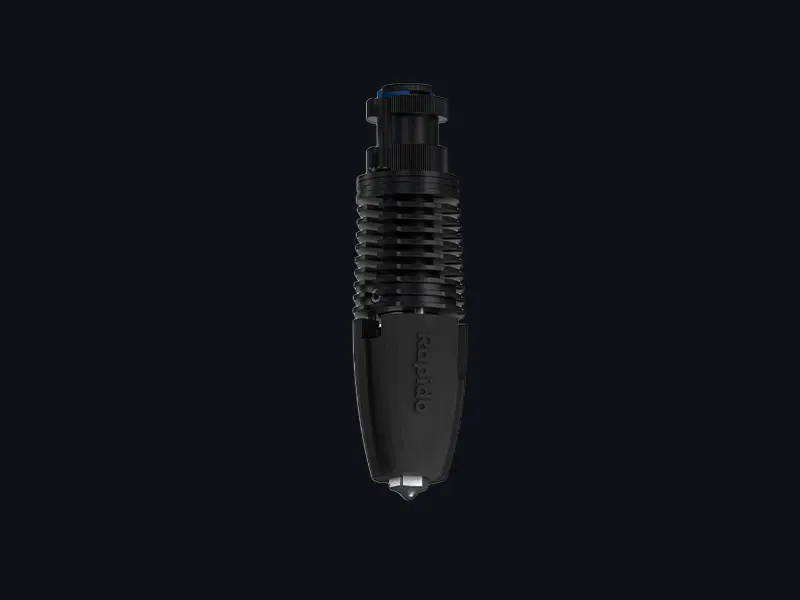
The Rapido 2 UHF is not the hotend for every Voron build. If you're printing structural parts in PLA at 80mm/s, a Dragon HF does the same job for $30 less and weighs half as much. The UHF's extended melt zone and 80W heater only justify themselves once you start pushing volumetric throughput — which, on a well tuned Voron 2.4, happens above about 60mm/s with a 0.4mm nozzle.
Where the Rapido 2 UHF shines is in multi-material printing and draft mode. With a 0.6mm or 0.8mm nozzle at 200mm/s, the UHF stays well inside its thermal limits while a standard hotend is already gasping. The point is a hotend that stops being the bottleneck, so your motion system sets the speed limit, and that's exactly the relationship you want.
The bi-metal heat break is worth mentioning independently. It outperforms titanium-only heat breaks at the top of the temperature range because it manages heat distribution more actively rather than simply insulating. For anyone printing nylon or ABS at 270°C+, the more active thermal management reduces the likelihood of partial melts creeping up the heat break.